
China Best Water Flow Control Valve Manufacturers?

Choosing China’s best water flow control valve manufacturers requires more than comparing catalog prices. A reliable supplier must control pressure, flow rate, material quality, and delivery consistency. In a treatment plant, one small valve may regulate thousands of liters every hour. Its failure can stop filtration, damage pumps, or contaminate a clean-water line.

The need is substantial. The United Nations World Water Development Report 2024 states that agriculture accounts for about 70% of global freshwater withdrawals. This figure highlights why accurate water management matters. Grand View Research also reports sustained growth in the global industrial valves market, driven by water infrastructure, energy, and process industries. However, market forecasts differ between research firms. That is worth remembering. Numbers can guide research, but they cannot replace factory evidence.

Béla G. Lipták, editor of the Instrument Engineers’ Handbook, describes the control valve as “the final control element in most process control loops.” That sentence explains the valve’s practical importance. The best Chinese manufacturers should show measurable performance, not only polished brochures. Look for pressure-cycle testing, flow calibration records, traceable materials, and ISO 9001 quality systems. For potable-water projects, NSF, WRAS, or equivalent approvals may also matter. Check the exact certificate scope.

A useful comparison should examine butterfly, ball, globe, diaphragm, and pressure-reducing designs. It should also review stainless steel grades, EPDM or PTFE seals, actuator options, and spare-part support. Factory visits can reveal machining discipline, clean assembly areas, and test-bench capacity. No factory is perfect. Weak documentation, unclear tolerances, or vague warranty terms deserve careful questions. This guide evaluates China’s leading water flow control valve manufacturers through those practical standards, technical records, and customer-use evidence.
China Best Water Flow Control Valve Manufacturers?

What Is a Water Flow Control Valve?

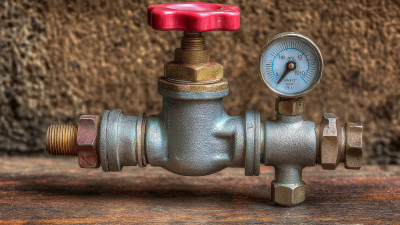
A water flow control valve regulates how much water moves through a pipe. It may start, stop, reduce, or redirect flow. Manual valves use a handwheel. Automatic valves use an actuator, sensor, or controller. The valve responds to pressure, temperature, or changing demand.

This equipment matters in homes, factories, irrigation systems, and treatment plants. The WHO and UNICEF Joint Monitoring Programme reported that 2.2 billion people lacked safely managed drinking water in 2022. Reliable control helps protect limited supplies and maintain stable pressure. In practice, engineers select a valve by flow rate, pressure range, pipe size, fluid quality, and operating frequency. The Kv or Cv value estimates capacity. An undersized valve may create noise and pressure loss. An oversized valve may hunt and control poorly. Neither choice is harmless.

Tips: Measure real flow before ordering. Check the valve’s pressure rating and sealing material. For drinking-water systems, confirm suitable approvals and corrosion resistance. Install a strainer upstream when debris is possible. Keep access around the actuator for maintenance. Watch for cavitation, which sounds like gravel inside the pipe. It can damage internal surfaces. Field experience also shows that installation errors cause many control problems. A perfect specification cannot repair reversed flow direction, trapped air, or poor calibration. That part deserves more attention.

How Water Flow Control Valves Work

Water flow control valves regulate how much water moves through a pipe. They do this by changing the opening inside the valve body. A fully open passage allows higher flow. A narrower passage creates resistance and reduces flow.

In practical systems, a sensor may measure pressure, temperature, or flow rate. The control unit compares that reading with the required setting. An actuator then moves the valve stem or disc. This adjustment can happen gradually, avoiding sudden pressure shocks. Globe valves provide accurate throttling for many industrial lines. Butterfly and ball valves can also control flow when selected carefully. The design depends on pipe size, fluid condition, pressure, and response speed.

Small details matter. A valve installed backward may create unstable performance. Air pockets can cause noise, vibration, or inaccurate readings. Sediment may damage sealing surfaces over time. Not every large valve gives better control. Real installations are rarely perfect. A pipe may have limited space, uneven pressure, or changing demand. For reliable operation, technicians should check flow capacity, actuator range, connection quality, and maintenance access. Testing under real working conditions remains important. Laboratory data cannot describe every site. That is where careful engineering judgment matters.

Key Types of Water Flow Control Valves in China

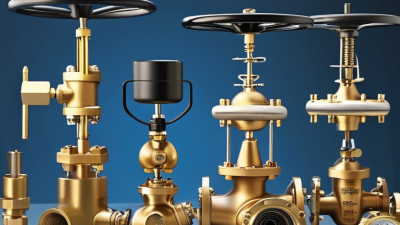
China’s water valve manufacturers supply several designs for different hydraulic duties. Gate valves provide low resistance for fully open pipelines, but they are poor choices for frequent throttling. Globe valves offer finer flow adjustment through a shaped plug and seat. They usually create higher pressure loss.

Butterfly valves suit large-diameter water mains because their compact discs require less installation space. Ball valves deliver quick shutoff and a tight seal, especially on smaller utility lines. Check valves prevent reverse flow without manual operation. In pumping stations, swing and silent check valves help reduce backflow shocks, though incorrect sizing can still create water hammer. Diaphragm valves handle corrosive or dirty water while isolating the actuator from the medium.

Pressure-reducing valves maintain safer downstream pressure in building networks. Automatic control valves respond to pressure, flow, or level signals. A 2024 MarketsandMarkets report valued the global industrial valves market at approximately 78 billion US dollars in 2023, showing the scale of demand behind these technologies. China’s water treatment equipment sector is also projected to expand through 2028, according to Mordor Intelligence’s 2024 market assessment.

Practical selection depends on more than valve material. Engineers check flow rate, pressure range, pipe diameter, temperature, suspended solids, and actuator response. Field experience matters here. A stainless-steel valve may resist corrosion, yet its seat can fail quickly in abrasive water. That detail is often missed. Chinese suppliers should provide pressure-test records, dimensional drawings, material certificates, and performance data aligned with applicable GB or international standards. The documentation is not decoration. It exposes weak assumptions before installation.

China Best Water Flow Control Valve Manufacturers? – Key Types of Water Flow Control Valves in China

Valve Type Primary Flow-Control Method Typical Water Applications Common Nominal Size Range Typical Pressure Class Common Body Materials Main Advantages Important Limitations Procurement Considerations
Butterfly Valve Rotating a circular disc around a central or offset shaft Water distribution, cooling-water systems, treatment plants, irrigation and HVAC Commonly DN50–DN2000; larger sizes are also available for engineered projects Often PN6–PN25; higher ratings depend on design and material Ductile iron, cast iron, carbon steel, stainless steel Compact structure, low weight, short face-to-face length and relatively low cost Disc remains in the flow path; throttling may increase turbulence and seat wear Check liner compatibility, shaft sealing, disc material, actuator torque and allowable flow velocity
Ball Valve Turning a drilled spherical ball through 90 degrees Potable water, service connections, process water and utility isolation Commonly DN15–DN300 in water systems Often PN10–PN40, depending on body design and connection type Brass, bronze, stainless steel, carbon steel, ductile iron Fast quarter-turn operation, low pressure loss when fully open and reliable shutoff Usually better for isolation than continuous throttling; abrasive solids can damage seats Verify full-port or reduced-port design, seat material, potable-water suitability and cavity-relief requirements
Globe Valve Linear movement of a plug or disc toward a stationary seat Precise flow regulation, water-treatment skids, boiler-feed systems and bypass lines Commonly DN15–DN400 Often PN10–PN40; higher classes are available in engineered designs Cast iron, ductile iron, carbon steel, stainless steel Good throttling capability and predictable control characteristics Higher pressure drop, larger installation footprint and higher operating force than many quarter-turn valves Review flow direction, Cv or Kv data, actuator sizing and cavitation risk at high pressure drops
Gate Valve Raising or lowering a wedge or slab gate perpendicular to the flow Main pipelines, transmission networks, reservoirs and waterworks isolation Commonly DN50–DN2000 Often PN6–PN25 for water-service designs Ductile iron, cast iron, carbon steel, stainless steel Low resistance when fully open and suitable for large-diameter pipeline isolation Slow operation; partial opening can cause vibration, erosion and seat damage Confirm resilient-seated or metal-seated construction, stem orientation, buried-service details and operating turns
Check Valve Automatic closure using reverse flow, gravity, spring force or a weighted disc Pump discharge, water-transfer pipelines, booster stations and backflow prevention Commonly DN25–DN1200 Often PN6–PN40 Ductile iron, cast iron, carbon steel, stainless steel Protects pumps and pipelines without external actuation Incorrect selection can cause water hammer, chatter or excessive pressure loss Match the valve type to flow velocity, installation orientation, reverse-flow conditions and transient-pressure analysis
Pressure-Reducing Valve Self-operated diaphragm or piston mechanism maintains a lower downstream pressure Municipal water networks, high-rise buildings, industrial supply and district metering areas Commonly DN25–DN600 Commonly PN10–PN25 Ductile iron, cast iron, carbon steel, stainless steel Controls downstream pressure and reduces the risk of pipe and equipment damage Requires clean pilot passages and sufficient differential pressure for stable operation Specify inlet and outlet pressure, minimum flow, set-point range, water quality and maintenance access
Float-Control Valve A float-operated pilot or mechanical float controls inlet flow according to water level Reservoirs, storage tanks, elevated tanks and water-level management systems Commonly DN25–DN500 Often PN10–PN25 Ductile iron, cast iron, stainless steel, bronze Automatic tank filling and overfill protection without continuous electrical power Float location, turbulence and debris can affect level-control accuracy Check closing speed, anti-surge features, float installation position and emergency shutoff provisions
Air-Release Valve Releases trapped air during filling and operation, and admits air during pipeline draining Long water pipelines, pump stations, rising mains and high points in distribution networks Commonly DN25–DN300 Often PN10–PN25 Ductile iron, cast iron, stainless steel Reduces air pockets, improves hydraulic performance and helps limit vacuum conditions Poor sizing or placement may allow water discharge, slam closure or inadequate air admission Evaluate pipeline profile, filling and draining rates, air-release capacity and surge-control requirements
Needle Valve A tapered plunger provides fine adjustment through a small flow passage Flow-metering lines, hydraulic control circuits, pump bypasses and pressure-control systems Commonly DN15–DN600, depending on design Often PN10–PN40; project-specific higher ratings are available Ductile iron, carbon steel, stainless steel, bronze Accurate regulation and good control over high differential pressure Higher cost, larger pressure loss and possible cavitation at unsuitable operating points Request flow curves, cavitation limits, actuator requirements and recommended operating range
Solenoid Valve An electromagnetic coil moves a plunger or diaphragm to open or close flow Automatic water dispensers, irrigation controls, small treatment equipment and process skids Commonly DN6–DN100 Typically PN6–PN25, depending on the model Brass, stainless steel, engineered polymers Fast electrical actuation, compact dimensions and easy integration with control systems Small passages can clog; coil voltage, heat and minimum differential pressure must be considered Confirm voltage, normally-open or normally-closed action, duty cycle, orifice size and filtration requirements
Selection note: Actual size and pressure ranges vary by valve design, end connection, material, temperature, water quality and applicable project standards. Always verify certified pressure-temperature ratings, leakage class, dimensional standards, inspection requirements and test documentation before purchasing.

How to Evaluate Chinese Valve Manufacturers

China Best Water Flow Control Valve Manufacturers?

How to Evaluate Chinese Valve Manufacturers

China’s valve sector is broad, but supplier count alone proves little. Grand View Research valued the global industrial valve market at about US$77 billion in 2023. This scale makes technical screening essential. Ask for recent project references, not polished catalog images. A reliable manufacturer should explain body materials, sealing compounds, pressure ratings, and service limits clearly.

Visit the production floor when possible. Check casting quality, CNC machining, coating thickness, and calibration records. Request material certificates and witnessed hydrostatic test reports for each valve series. For drinking-water systems, review compliance with relevant standards, such as EN 1074 or AWWA requirements. ISO 9001 certification supports process control, but it does not guarantee valve performance. That distinction is often missed.

Demand measurable evidence. Review leakage rates, cycle-test results, inspection plans, and corrective-action records. The ISO Survey 2023 reported more than one million ISO 9001 certificates worldwide, so certification should be treated as a starting point, not final proof. Evaluate response time for spare parts and technical claims. Ask who owns the tooling and how design changes are documented. Small details matter.

Some evaluations fail because buyers compare only price and nominal diameter. I have seen inexpensive valves create costly installation delays through poor actuator alignment. Factory claims can also sound stronger than the evidence. Require independent inspection for critical orders, and keep acceptance criteria written before production begins. The process may feel slower. It is usually cheaper than discovering weak seals after commissioning.

Leading China-Based Water Flow Control Valve Manufacturers

Leading China-Based Water Flow Control Valve Manufacturers

China-based water flow control valve manufacturers serve municipal networks, building services, irrigation systems, and industrial plants. Experienced suppliers usually offer butterfly, ball, gate, globe, and check valves in several sizes. Their factories may support ductile iron, stainless steel, brass, or engineered polymer bodies. Material choice depends on pressure, temperature, water quality, and installation conditions.

Reliable manufacturers show practical engineering, not only attractive catalogs. They should provide pressure ratings, flow data, dimensional drawings, and clear sealing specifications. Production teams commonly use CNC machining, controlled casting, and hydrostatic testing. Each batch should have inspection records and traceable material information. Ask about actuator calibration when automatic control is required. Small errors can create unstable flow, noise, or expensive maintenance.

Factory experience matters. A capable supplier can review pipe layouts, connection standards, and operating cycles before recommending a valve. Request samples for testing under real water conditions. Check thread accuracy, flange alignment, coating thickness, and handle movement. No manufacturer is perfect. A polished website can still hide weak documentation or inconsistent lead times. This is where careful communication and independent inspection help. Some suppliers may also adjust designs for custom pressure ranges or space limitations, although those changes need formal confirmation. Cost matters, but predictable performance matters more.